Anguilla — Five Miles from Sint Maarten, a World Apart
Five miles off Saint-Martin's northern coast, the 35-square-mile island of Anguilla shares deep cultural and family ties with its neighbor. Discovered in 1495 by Christopher Columbus, the island's economy ran on salt ponds for centuries until tourism and offshore investment made both obsolete.
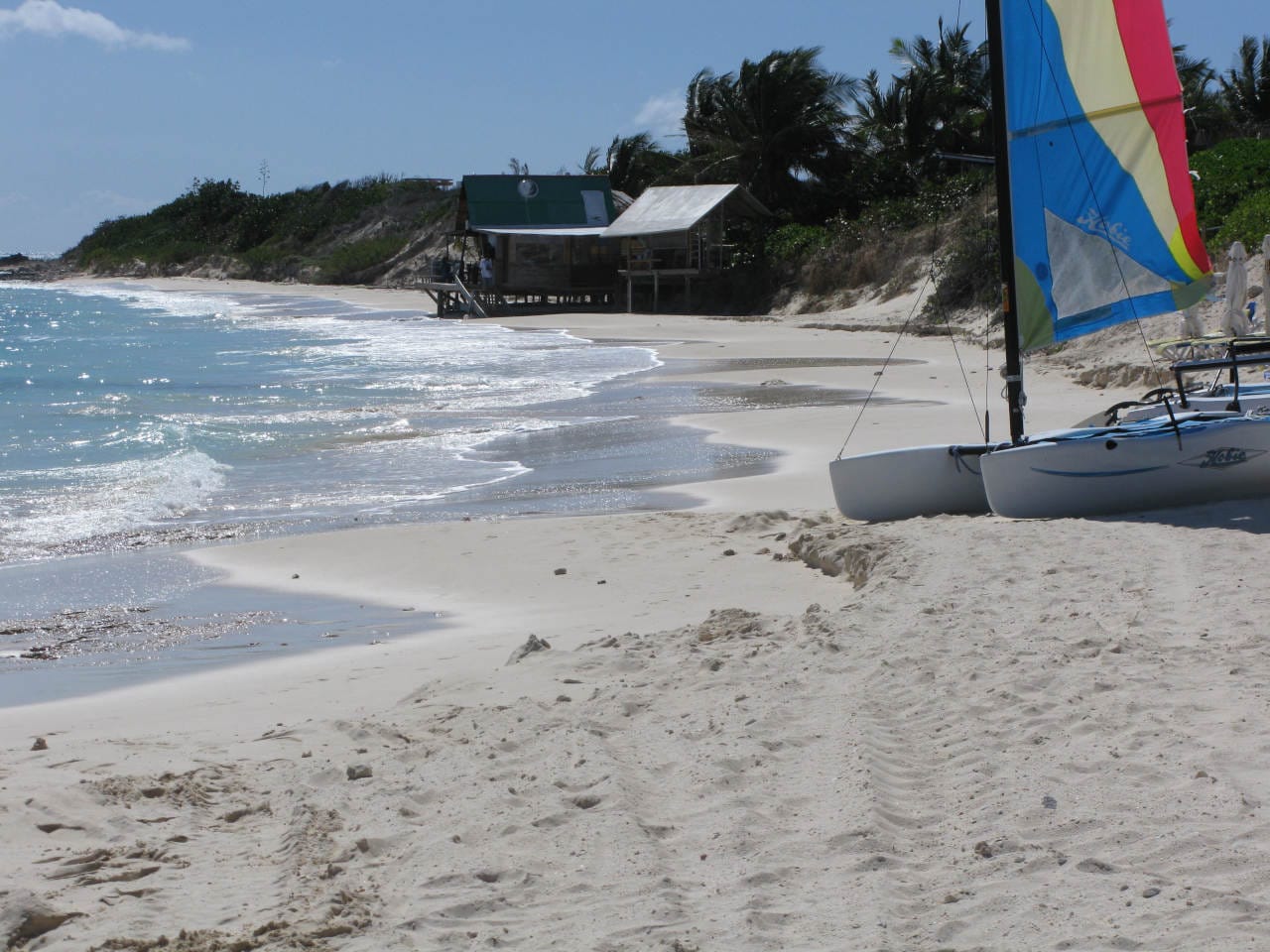
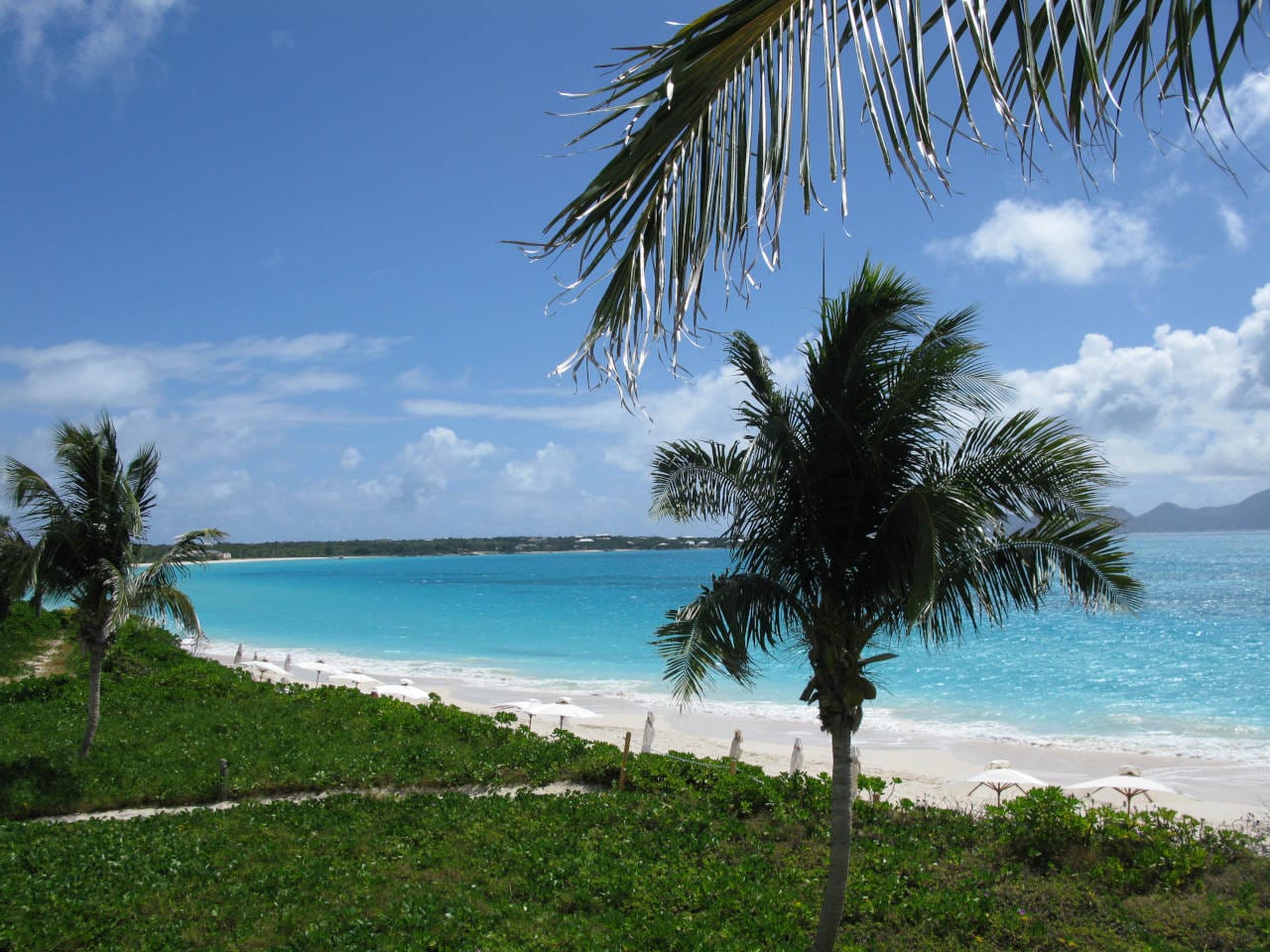
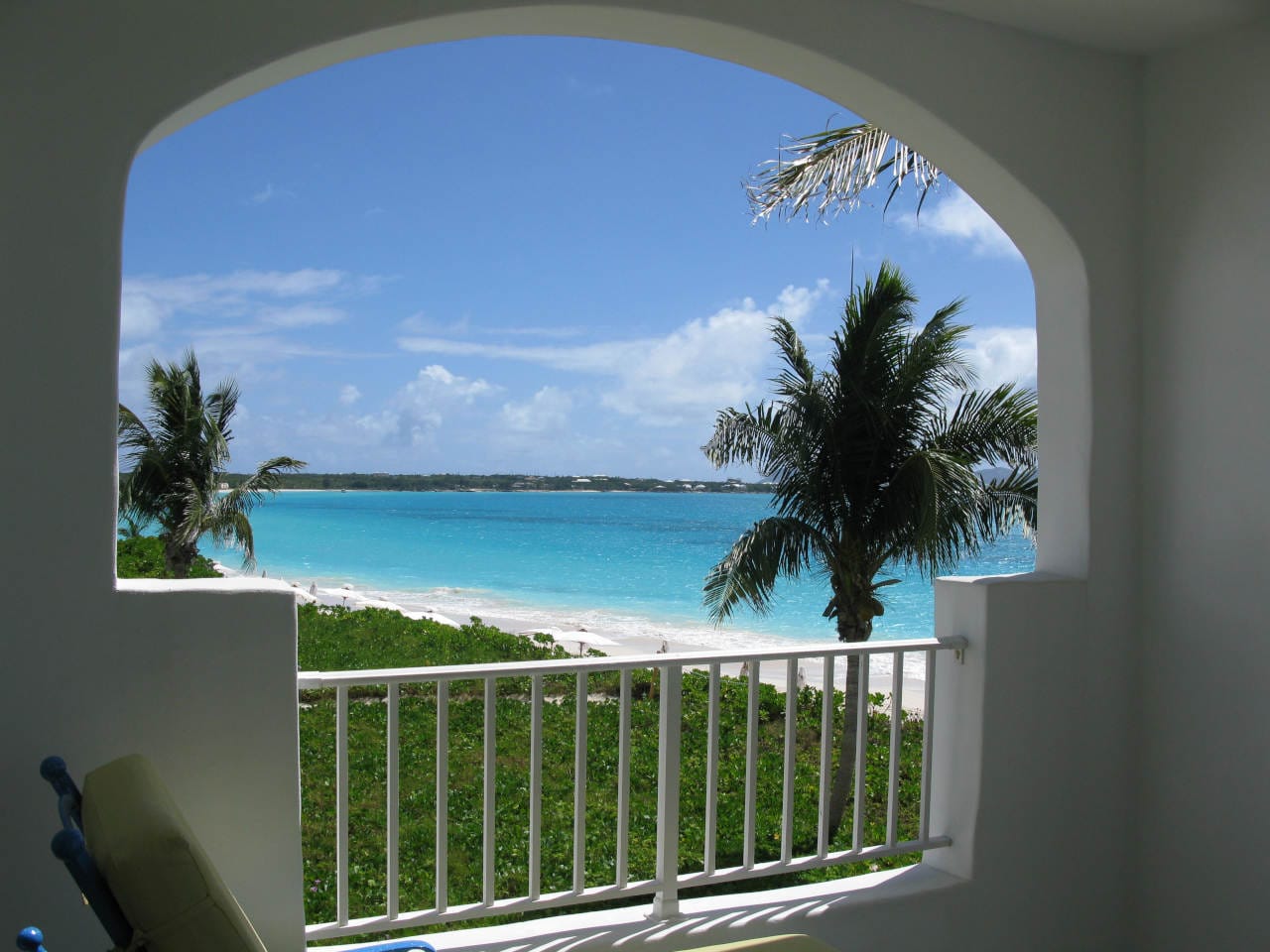
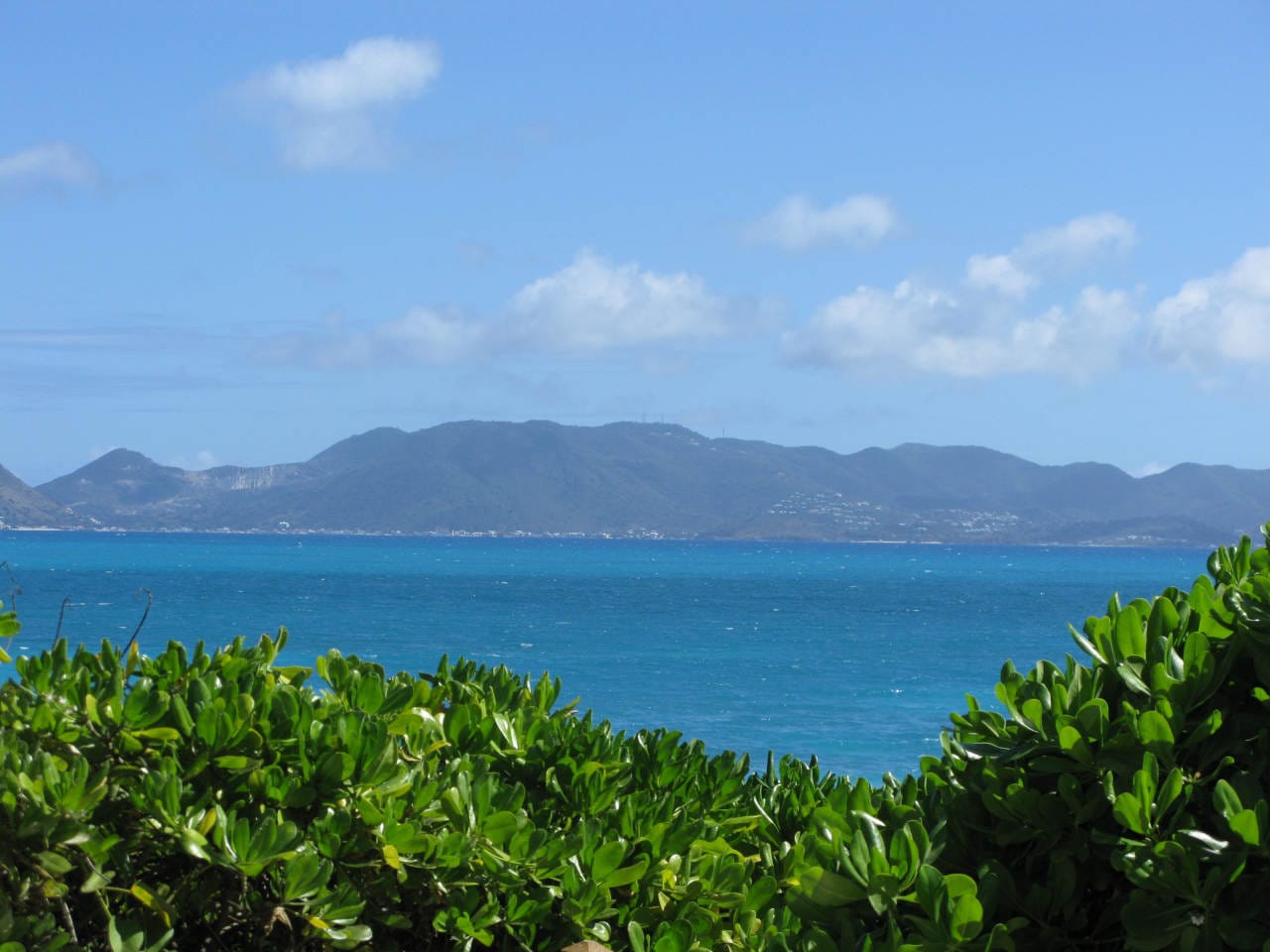
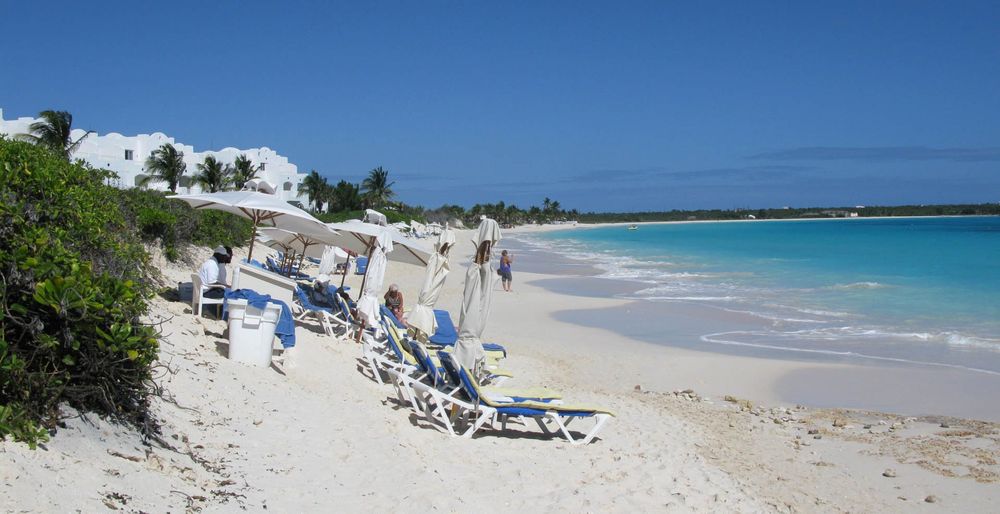
Anguilla is an island of soft rolling hills and wide, largely empty beaches — genuinely undeveloped by Caribbean standards and consistently rated among the best in the region. Several upscale resorts attract the kind of guests who can relax without drawing attention, which is precisely the point.
Cross five miles of water from Sint Maarten and the rules change immediately. Anguilla is a British Overseas Territory — its 17,400 residents are British citizens, not just British subjects. Traffic drives on the left, as it does in the UK. The Eastern Caribbean Dollar is the official currency, though US Dollars are widely accepted.
Ferries depart from Marigot throughout the day for the 20-minute crossing. Check current departure times directly with the ferry operators as schedules change seasonally. Private speedboat ferries from Simpson Bay are also available. Several daily flights make the crossing in under 10 minutes. A passport is required in both directions.
To explore Anguilla at your own pace, rent a car from Junie's Car Rental — ask for Junior or Nancy.
Freedom Across Five Miles of Water
Britain abolished slavery throughout its territories in 1834. The French side of Saint-Martin followed in 1848. The Dutch side waited until 1863. For nearly three decades, freedom existed five miles across the water — close enough to see, close enough to swim.
Enslaved people on Saint-Martin knew this. Some of them made the crossing. Anguilla, already British territory, received them as free people the moment they arrived. The families that formed from those crossings — some who made it, some who didn't, relatives separated by five miles of sea and thirty years of legal difference — became the foundation of the family ties that bind Anguilla and Sint Maarten to this day.
Those ties are not merely geographic. They are historical in the deepest sense. The back-and-forth between the two islands that residents take for granted has roots that go back nearly two centuries.
The Smallest War in History
Anguilla's separation from Saint Kitts and Nevis was not a diplomatic process. It was a revolution — though the word requires generous interpretation.
In 1967, Britain combined Anguilla, Saint Kitts, and Nevis into a single Associated State, placing Anguilla under the government of Saint Kitts. Anguillians, who had no cultural, economic, or historical affinity with Saint Kitts and resented being administered from there, promptly expelled the Saint Kitts police force from the island. The Saint Kitts prime minister, alarmed, advised the British Crown that Anguilla had been taken over by the American Mafia and was on the verge of becoming a criminal state in the Caribbean.
The British response was military. In March 1969, paratroopers and Royal Marines landed on Anguilla in a full amphibious operation — described at the time with a straight face as resembling the D-Day landings. Journalists flew in from around the world to cover the invasion. What they found was a peaceful island of approximately 6,000 people who were, by most accounts, mildly pleased to see British soldiers and deeply confused about what the fuss was about.
The sole military casualty of the Anguilla Revolution was an Anguillian combatant who shot himself in the foot. The legend holds that as the troops came ashore, an elderly resident approached them not to surrender but to lodge a complaint — someone had been stealing her chickens.
The British stayed. Having arrived in force and found nothing to conquer, they built roads, a hospital, and schools. Anguilla, for its part, pursued a legal strategy that had never been attempted before and has never been needed since: it sued the United Kingdom to be taken back as a colony. The island won. In 1980, Anguilla formally separated from Saint Kitts and Nevis and was restored to direct British Overseas Territory status — exactly where it had wanted to be all along.
The separation from Saint Kitts and Nevis is one the island has never regretted.
An Accidental Windfall
Anguilla's good fortune extends beyond its beaches. When the internet was young, countries were assigned two-letter domain extensions. Anguilla received .ai — at the time, a meaningless administrative code.
When artificial intelligence became the defining technology story of the decade, every company in the space wanted a .ai domain to signal their positioning. By 2025, Anguilla was earning $85 million annually from .ai domain registrations — 47% of the entire national budget. Individual domains have sold for extraordinary sums. The cofounder and CTO of HubSpot paid $700,000 for you.ai. cloud.ai sold for $600,000. Registrations exceeded one million in January 2026, with no sign of slowing.
It was pure coincidence that Anguilla and not its neighbor Antigua received the .ai extension in 1995. The island's prime minister has acknowledged as much. Sint Maarten, five miles to the south, received .sx — harder to remember, easier to mistype, and carrying associations that have made local businesses reluctant to use it. The shipping company safe.sx operates in complete innocence of how its URL reads to an outside eye. Most Sint Maarten businesses have quietly concluded that .sx is not a domain they want on their business card, and default to .com instead.
The Caribbean has always rewarded the fortunate. Anguilla, quietly, has been very fortunate indeed.
Family, Borders, and the Brexit Nobody Solved
The family ties between Anguilla and Sint Maarten run deep — deepened further by the history of the abolition crossing, strengthened through generations of people moving back and forth across five miles of water for work, marriage, and daily life. An Anguillian family without relatives on Sint Maarten is unusual. A Sint Maarten family without Anguillian connections is rarer still.
Then came Brexit.
Anguillians are British citizens. St-Martin residents carry French nationality, the Sint Maarten residents are Dutch and, with it, European Union citizenship. Before Brexit, that combination created no meaningful friction. EU free movement applied broadly across the Caribbean territories of EU member states, and the practical reality of island life smoothed over what the legal framework left ambiguous.
After Brexit, the picture changed — in theory. Anguilla, as a British Overseas Territory, sits in a complicated relationship with the post-Brexit settlement. Anguillians no longer benefit from EU free movement. Dutch Sint Maarteners traveling to Anguilla enter British territory as third-country nationals. The legal situation for families who have lived across both islands for generations, who own property on both sides, who work on one island and sleep on the other, is genuinely unresolved.
Both governments have reached the same conclusion: ignore it. The five-mile strait between Marigot and Blowing Point has seen enough history — salt trade, freedom crossings, botched invasions, chicken theft — to absorb one more legal ambiguity without visible distress. The families travel back and forth. Life continues. The paperwork does not.
It is, in its way, the most Caribbean resolution imaginable.
The Basket
Anguilla once operated a proper two-tier postal service: airmail for urgent correspondence at a premium rate, steamer for standard mail at the lower postage. When direct sea freight from Anguilla ended — all freight now moves through Galisbay on the French side of Saint-Martin — the steamer mail service went with it. Raising the postage rate for standard mail, however, proved politically impossible.
The solution was characteristically pragmatic. All mail now leaves Anguilla by air. Standard mail, to justify its lower postage rate, first sits in a basket for six weeks. After six weeks it is placed on the plane with everything else.
The postage is lower. The delivery is slower. The rule is followed. Nobody asks too many questions.