
Why Are There Still Hurricane Ruins in St. Maarten?
Every visitor notices them.
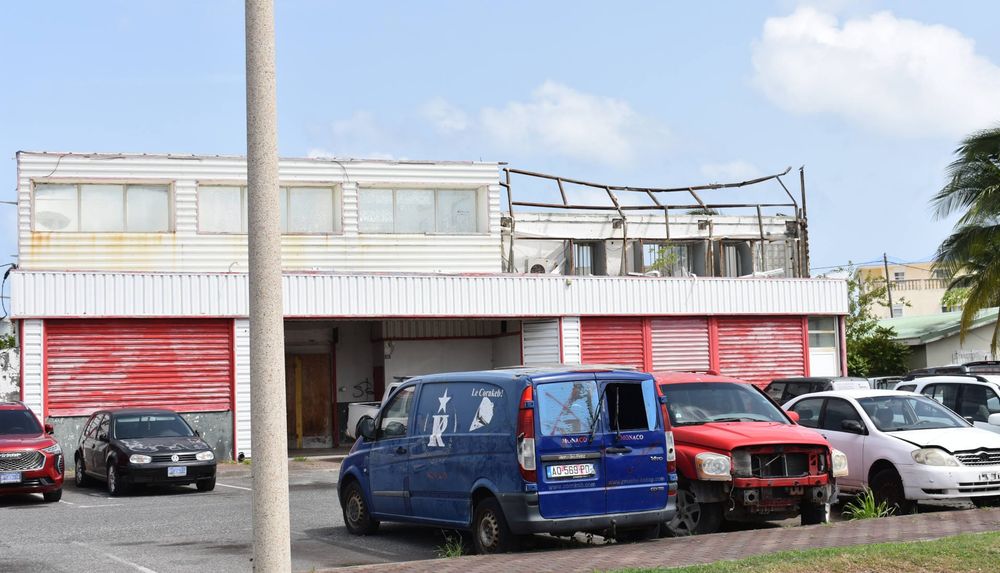
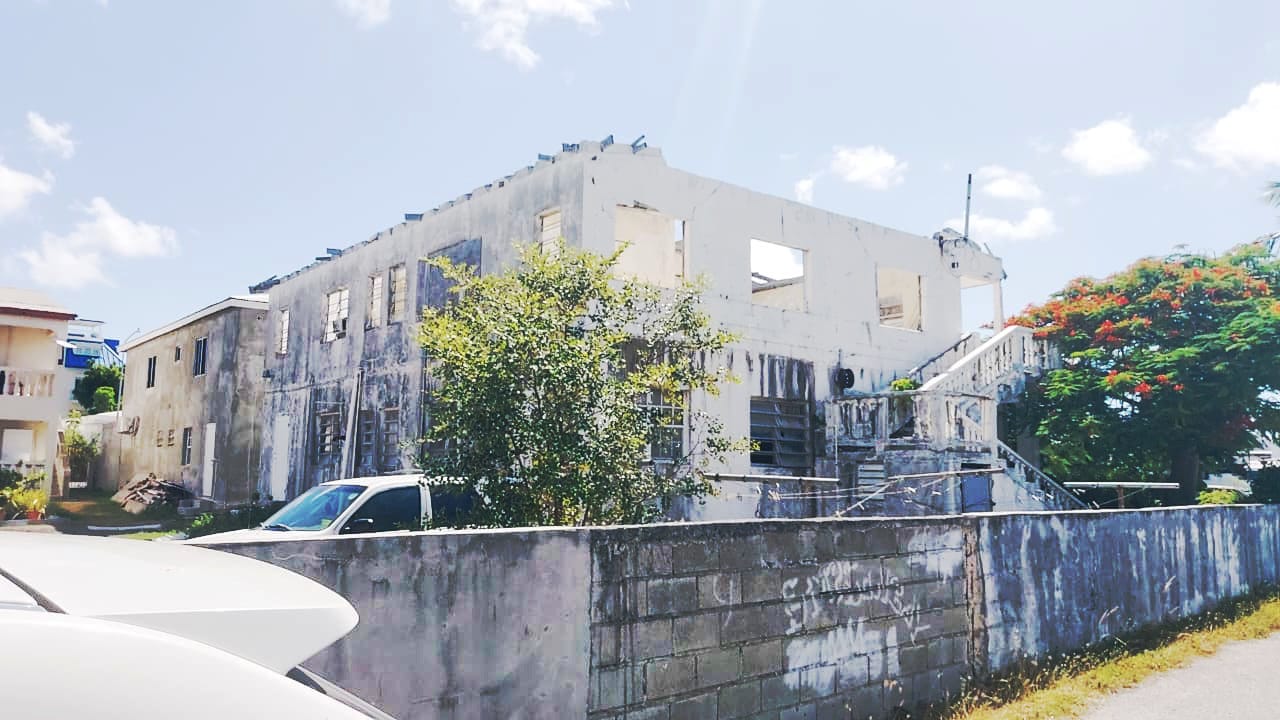
You leave Princess Juliana Airport, drive along the coast, and somewhere between luxury villas, beach bars, and colorful Caribbean homes, you suddenly pass a roofless house. A few minutes later, an abandoned apartment building. Then a collapsed supermarket that looks as if the hurricane struck only yesterday.
The question is almost inevitable: "Why hasn't anyone rebuilt these places?"
The answer is far more complicated than most visitors imagine.
Hurricane Irma devastated St. Maarten - St. Martin in September 2017, destroying thousands of buildings across the island. Nearly a decade later, many damaged structures remain exactly where they stood after the storm. Some abandoned buildings even predate Irma and have remained untouched since Hurricane Luis in 1995.
The visible ruins are not simply evidence of a slow reconstruction. Each has its own story.
Some People Never Came Back
For many island residents, Hurricane Irma was more than a natural disaster.
Imagine spending hours inside your home while a Category 5 hurricane tears away the roof above your head. Furniture, photographs and family possessions disappear into the wind. You survive, but the feeling of safety never returns.
Some residents decided they had experienced their last hurricane.
After receiving insurance settlements, they moved permanently to France, the Netherlands, or elsewhere. They started a new life and never returned to rebuild.
The abandoned house that catches a tourist's attention may simply belong to someone who decided that no amount of money was worth facing another hurricane season.
Not Every Home Was Insured
Visitors are often surprised to learn that many Caribbean homes were never financed through banks.
Instead of taking out a mortgage, families frequently built their homes gradually. One year they poured the foundation. The next year they added walls. A few years later came the roof, another room, or a second floor. Eventually the home was complete, free of debt. But often it was also uninsured.
When Hurricane Irma destroyed these homes, rebuilding depended entirely on the owner's financial resources. For many families, reconstruction simply became impossible.
The Legal Maze Nobody Sees
Some abandoned buildings are trapped in legal uncertainty rather than physical destruction.
Property ownership on St. Maarten - St. Martin can be remarkably complicated.
Large family estates have been passed down through generations without formal settlement of inheritance. A single parcel of land may have dozens, or even hundreds, of potential heirs spread across several countries.
Until ownership is legally resolved, redevelopment may be impossible.
This is not merely anecdotal. In its 2021 report on reconstruction of the island's French side after Hurricane Irma, the French Court of Accounts identified abandoned property as one of the major obstacles to rebuilding and recommended adapting legislation specifically to address properties in a state of abandonment.
Rebuilding Is Not Always Allowed
Another misconception is that owners are always free to rebuild.
They are not.
After Hurricane Irma, governments reassessed areas that had suffered the greatest storm surge and flooding. Some neighborhoods were considered too vulnerable to rebuild in the same way as before.
Urban planning, environmental regulations, and natural hazard prevention have become central parts of reconstruction policy.
The French Court of Accounts concluded that completing reconstruction requires updated urban planning, stronger enforcement of building regulations, and implementation of natural hazard prevention plans.
These measures improve resilience against future hurricanes, but they can also make rebuilding slower and more complex.
Recovery Takes More Than Money
Many people assume reconstruction is simply a matter of funding.
The reality is different.
According to the French Court of Accounts, St. Martin faced significant administrative and organizational challenges after Irma. The local administration had limited capacity to manage projects of this scale, while reconstruction involved complicated procurement procedures, planning, engineering, and coordination between multiple government agencies.
The report also notes that, four years after Hurricane Irma, less than half of St. Martin's damaged building stock had been rebuilt, a striking contrast with neighboring St. Barths, where reconstruction was largely complete.
Recovery, it turns out, involves far more than replacing roofs.
A Rapidly Changing Island
St. Maarten - St. Martin has transformed dramatically during the past fifty years.
Before tourism exploded in the 1980s, the island was a much smaller community. Administrative systems, land registration, and urban planning were not nearly as comprehensive as they are today.
As tourism flourished and property values increased, governments modernized administration, taxation, and planning. While these changes improved governance, they also exposed unresolved ownership issues dating back decades.
Some of today's abandoned properties are caught between the island's past and its present.
Every Ruin Has a Different Story
Visitors sometimes assume every abandoned building is another victim of Hurricane Irma.
That is rarely true.
One property may belong to a family scattered across several continents.
Another may be tied up in inheritance proceedings.
A third may stand inside an area subject to new planning restrictions.
A fourth may have belonged to owners who simply chose never to return after surviving one of the strongest Atlantic hurricanes ever recorded.
From the road, they all look alike.
Their histories could not be more different.
Looking Beyond the Ruins
The abandoned buildings visible around St. Maarten - St. Martin tell only one part of the island's story.
The other story is one of remarkable resilience.
Hotels reopened. Restaurants welcomed guests again. Beaches filled with visitors. Businesses rebuilt. Infrastructure improved. Tourism returned as the island demonstrated an extraordinary ability to recover from one of the most destructive hurricanes in Caribbean history.
Yet the remaining ruins remind us that recovery is never measured only in concrete and steel.
Behind every roofless house is a family.
Behind every abandoned apartment building is a legal, financial, or personal story.
And behind every ruin is a reminder that rebuilding a community takes far longer than rebuilding a building.
Sources
- French Court of Accounts. The Reconstruction of St. Martin and St. Barthélemy after the Passage of Hurricane Irma (2021). https://www.ccomptes.fr/sites/default/files/2021-10/20210708-report-The-reconstruction-St.Martin-St.Barthelemy-after-Hurricane-Irma.pdf