The Treaty of Concordia | St Maarten - St Marin
The Treaty of Concordia is the oldest international treaty, which is still being enforced
Sint Maarten — Saint Martin holds a distinction that few places on earth can claim: it is governed by two separate nations under a treaty that has been in continuous force since 1648. The Treaty of Concordia, signed on March 23rd of that year on the mountain known as Mont des Accords, is the oldest international treaty still in effect anywhere in the world. The island's division is not a colonial accident or a modern administrative arrangement — it is the result of a formal agreement between France and the Netherlands that has outlasted empires, revolutions, wars, and the complete transformation of the modern world.
The Legend of the Border
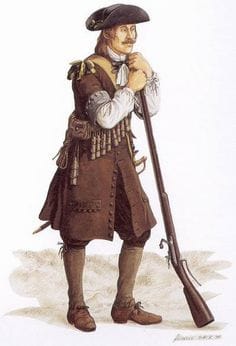
The official treaty is a matter of historical record. The story of how the border was drawn is a matter of legend — and considerably more entertaining.
According to the island's founding myth, the French and Dutch agreed to divide the island by holding a walking race. Each soldier would follow the coastline from a fixed starting point — the Frenchman heading north, the Dutchman heading south. Where they met again, a straight line would be drawn back to the starting point to mark the border.
Each man chose his drink according to his culture. The Frenchman carried a bottle of red wine. The Dutchman carried a bottle of Genever — Dutch gin. The consequences of this choice became apparent when the two men met again: the Dutchman's gin-assisted pace had been considerably slower than his more sober French competitor. The French side of the island covers roughly two thirds of the 37 square miles; the Dutch side one third. The gin, as island legend has it, is responsible for the difference.
Whether or not the legend is true, the result is real. The border that exists today roughly follows the line that would have resulted from such a race, and the mountain where the treaty was signed still bears the name that commemorates the occasion.
The Treaty Itself
What makes the Treaty of Concordia remarkable is not just its age but its content. Signed in 1648 — the same year as the Peace of Westphalia that ended the Thirty Years' War in Europe — it established a framework of coexistence between two nations on a single small island that has proven more durable than almost any political arrangement in the centuries since.
The treaty established joint use of the island's natural resources — fisheries, salt pans, rivers, fresh water, forests, and harbors — as common property for the benefit of all inhabitants. It guaranteed freedom of movement between the two sides. It created mutual obligations of defense. And it set up a framework for resolving disputes peacefully through the respective governments in Europe.
The nine articles of the original text are reproduced here in full:
Treaty of Concordia (a.k.a. The Partition Treaty of 1648) by which French and Dutch settlers agreed that the peoples of St. Martin shall coexist in a cooperative manner:
Today, the 23rd of March 1648, have assembled Robert de Lonvilliers, Knight and Lord of this place, Governor of the island of St. Maarten, on behalf of his Most Christian Majesty (i.e. the King of France) and Martin Thomas, likewise Governor of the said island, on behalf of the Prince of Orange and the States General of Holland, and Henri de Lonvilliers, Lord of Benevent, Savin and Courpon, Chevalier, Lord of La Tour, lieutenant-colonel of the island, and David Coppins, Lieutenant of a Dutch company, and Pitre van Zeun Hus, likewise Lieutenant of a company of the above mentioned, who, on either side, have agreed upon the following:
- That the French shall continue in that quarter where they are established at this present, and that they shall inhabit the entire coast which faces Anguilla;
- That the Dutch shall have the quarter of the fort, and the soil surrounding it on the south coast;
- That the French and Dutch established on the said island shall live as friends and allies, and that, in case of either party molesting the other, this shall constitute an infringement of this treaty, and shall therefore be punishable by the laws of war;
- That, if a Frenchman or Dutchman being guilty of a criminal act or an infringement of this agreement, or of disobedience to the commands of his superiors, or of whatever other remissness, shall withdraw to the territory of the other nation, the contracting parties shall be bound to cause such person to be arrested in their territory, and to deliver him up to his Governor on the latter's first requesting it;
- That the chase, the fisheries, the salt pans, the rivers, the lakes, the fresh waters, the dye-wood, mines and minerals, harbours and roadsteads, and other commodities of the said island shall be common, and shall serve to provide the wants of the inhabitants;
- That it shall be permitted to French persons at this present residing with the Dutch to join the French, if it so please them, and to take with their movables, foodstuffs and money and other commodities, provided they shall have settled their debts or given sufficient security, and that the Dutch shall be able to do likewise and on the same conditions;
- That, if enemies should attack one part or the other, the parties to this treaty shall be obliged to render each other aid and assistance;
- That the delimitation and partition of the said island between the two nations shall be submitted to the General of the French and the Governor of St. Eustatius, and to the deputies that shall be sent to visit the places; and that, their report having been made, they shall delimit their quarters, and proceed in the manner stipulated above;
- That any claims one party may have against the other shall be submitted to the King of France and the gentlemen of His Council, and to the Prince of Orange and the States of Holland. Neither of the above parties shall be able to construct fortifications without contravening the above agreement and compensations with respect to the other party.
Given on the date heretofore mentioned, on the mountain surnamed des Accords (Concordia) of the said island, and signed by the said gentlemen, in the presence of Bernard de la Fond, Knight and Lord of Esperance, Lieutenant of a French Company on St. Christophe.
What It Means Today
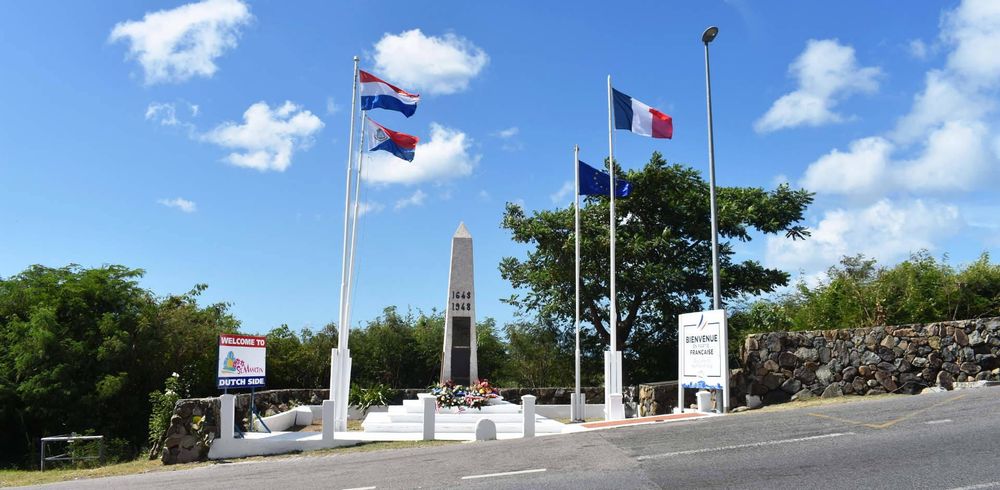
The treaty's most visible legacy is the open border. There are no passport controls between Sint Maarten and Saint-Martin. Residents and visitors cross freely, and have done so for 375 years. The border is marked by monuments and a welcome sign, but you will not be stopped. The cooperation it established — joint use of natural resources, mutual aid in times of threat, freedom of movement — describes the island's daily reality as accurately today as it did in 1648.
That a document signed on a Caribbean mountaintop by soldiers representing two European powers in the middle of the seventeenth century continues to govern the daily lives of the island's 80,000 residents is, by any measure, an extraordinary fact.
You might want to book an island tour with JoJunie Tours to learn more about the island's history.