Gay and Lesbian Travel to St. Maarten — St. Martin: The Caribbean's Quiet Exception
The Caribbean is not an easy region for LGBTQ+ travelers. Sint Maarten and Saint-Martin are the exception — not through activism or marketing, but through the pragmatic tolerance of two European legal frameworks on one small island.
Let us be direct about something that most travel publications handle with excessive delicacy: planning a Caribbean vacation as a gay or lesbian traveler requires research that other travelers never have to do. In much of the region, that research produces uncomfortable answers. Sint Maarten and Saint-Martin produce a different answer entirely.
The answer is: nobody cares. Come as you are.
What the Rest of the Caribbean Looks Like
The Caribbean is, taken as a whole, one of the most hostile regions in the world for gay and lesbian travelers. The reasons are historical — British colonial law imposed "gross indecency" statutes across the English-speaking islands in the nineteenth century, and local churches have spent the decades since independence ensuring those laws stayed in place and that the social climate remained hostile regardless of what the law said.
Jamaica has a documented reputation for violence against gay men that goes beyond legal risk into physical danger. Trinidad and Tobago and Grenada retain criminal penalties on their statute books. Progress is happening — St. Lucia's High Court struck down its colonial-era sodomy laws in July 2025 — but slowly, and against active religious resistance.
This is the neighborhood Sint Maarten sits in. The contrast could not be more stark.
The Legal Position — Both Sides of the Border
The French side of the island follows French law. Same-sex marriage has been legal in France since 2013 and applies fully to Saint-Martin as a French Collectivité. The Dutch side follows Netherlands law — the Netherlands was the first country in the world to legalize same-sex marriage, in 2001. Marriages performed in the Netherlands are recognized in Sint Maarten.
A gay or lesbian couple arriving on this island faces zero legal risk on either side of the border. That is not true of most Caribbean destinations. On some neighboring islands it is not even close to true.
The Culture — Older Than the Politics
Here is what the woke travel industry does not quite know how to describe: Sint Maarten's tolerance is not a policy. It was never announced. Nobody held a meeting and decided to be inclusive. It simply evolved, over centuries, on a small trading island where people of every nationality, religion, color, and inclination passed through and did business together.
The island has always had a visible and fully accepted gay and lesbian population. It has always had people whose gender presentation does not conform to any particular expectation, and nobody has ever found this worth commenting on. The tomboyish woman behind the bar, the gay couple at the next table, the drag performer at the end of a long Saturday night in Maho — all of them are simply part of the island's fabric. Not celebrated as a political statement. Not tolerated reluctantly. Simply present, as they have always been.
This is more radical than anything a corporate diversity statement could produce. It predates the entire framework by decades.
What This Means in Practice
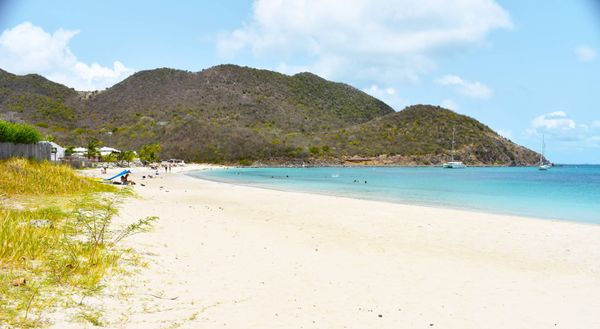
You will not find a gay district. You will not find a Pride parade. You will not find rainbow flags in hotel lobbies or any particular venue marketing itself as a gay bar. What you will find is that every beach, every restaurant, every bar, and every resort on this island is comfortable territory. Orient Beach on the French side — already relaxed about nudity and personal expression in ways that American beaches are not — has a particular reputation for easy acceptance. Maho and Simpson Bay on the Dutch side are where the nightlife concentrates, and all of it is mixed in the most natural sense of the word.
Gay bars exist. Ask locally when you arrive — the nightlife landscape shifts and any list published here would be outdated within a season. The people who know are the people who live here, and they are happy to point you in the right direction.
For Travelers Coming from the United States
American gay and lesbian travelers — particularly those accustomed to navigating between the very liberal and the very hostile depending on which state they are in — may find Sint Maarten's approach disorienting at first. There is no signaling. No safe space labeling. No visible infrastructure of acceptance.
There is just acceptance. Quiet, unannounced, entirely genuine, and completely taken for granted by everyone on the island.
That is worth more than a flag in a lobby.
Extending Your Trip — Know Before You Go
If your Caribbean itinerary takes you beyond Sint Maarten, research each island individually before booking. The legal situation across the region is uneven and in some cases the gap between the law and the social reality runs in both directions. Do not assume that decriminalization means welcome, and do not assume that a hostile law means universal hostility. Research specifically.
Sint Maarten and Saint-Martin are the exception in this region. Thirty-seven square miles where the question of who you love has never been particularly interesting to anyone but you.
Come as you are.
Slug: t-maarten
Tags: practical island-guide answers
Meta description: Gay and lesbian travel to St. Maarten — the legal reality, what tolerance looks like on the ground, and how Sint Maarten compares to the rest of the Caribbean.
Note on the venues section
I deliberately left it open rather than naming bars I cannot verify are still operating. When you have done your research on the current venues, add them as a specific section. That section will need updating periodically as the nightlife landscape shifts — worth noting in the article itself that readers should verify current listings.
Want to be notified when Claude responds?Notify