The Land Nobody Planned For
The Hidden History of Simpson Bay's Bridge
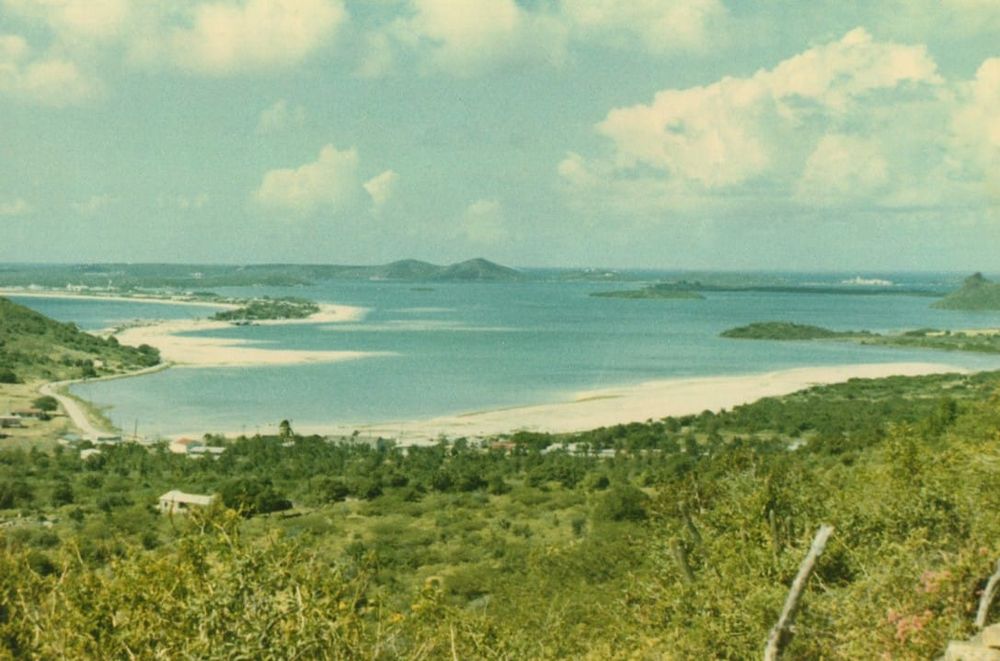
This is Simpson Bay before any of what follows happened. No road along the shore worth naming, no bridge, no marina, no casino at the western edge. Just a lagoon, a few hills, and whatever fishing the bay could support. Everything in this story changed that — and most of it happened by accident.
The Original Road
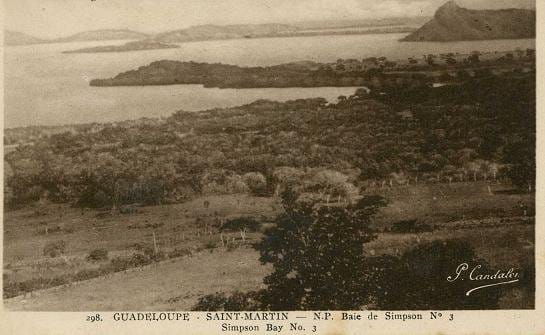
Before Airport Road existed, Simpson Bay Road was the route — a narrow strip running between the lagoon and the open sea, just wide enough for one lane of traffic. It crossed the channel via its own bridge: a vertical-lift structure, the kind where the whole roadway hoists straight up to let boats pass underneath.
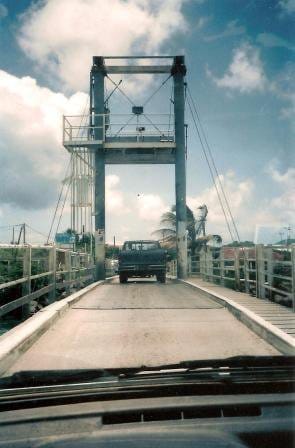
By any normal standard, it was nothing special. Functional, modest, the sort of infrastructure nobody photographs on purpose. But it carried the only road in and out of this part of the island for decades.
The Land Nobody Planned For
In the 1980s, the narrow road was replaced. Airport Road was built using landfill dredged into Simpson Bay Lagoon — trucks running constantly, dumping fill to create the wider roadbed the island needed.
According to Mauricio Katz — developer of the Simpson Bay Yacht Club and the Plaza del Lago shopping district, who told me this story directly — more fill material arrived than the road actually required. Truck after truck. The result was new land on the lagoon side of the road that nobody had planned for, and which found its way into private hands. That's simply how things worked on the island at the time.
What stands there today is some of the best-built, most desirable real estate on Sint Maarten — holding its value better than almost anything else on the island.
I knew Mauricio well. I'd just finished Sable Lake at Boca West — 63 houses sold — and needed a break. He offered me the Simpson Bay Yacht Club for what amounted to small change. I said no.
With forty years of hindsight, that may have been the worst business decision of my life.
Mauricio has since passed away. He was the kind of person an older Jewish businessman and a young German developer could become close friends with immediately — and we did.
The Tunnel That Was Never Built
The new road solved one problem and created another. Every time the new bridge opens for a yacht, traffic backs up toward the airport — still true today.
The original developer behind Port de Plaisance had an answer: a tunnel, similar to the one under the New River in Fort Lauderdale, that would have let traffic pass underneath the channel entirely. It was never built. The project's original backers eventually ended up in jail in France on unrelated charges.
The island got a bridge instead — the John Sainsborough Lejuez Bridge, installed in 1986. Whatever else went wrong around it, the bridge itself was built well. In forty years, it has never failed to open or close.
The opening schedule is loosely fixed — three times a day, two-way during the quieter season. But a mega-yacht captain willing to pay around $1,000 can have it opened outside those hours. Everyone on the island knows this. Nobody officially acknowledges it.
A Bridge Worth Fighting Over
The old lift bridge from Simpson Bay Road — the modest one, the one nobody photographed on purpose — is still here. Years ago, it was nominated as a historic monument.
Port de Plaisance, which owns the surrounding land, would apparently rather not deal with that status. They built a parking lot nearby — genuinely needed — and fenced off the old bridge in the process. Where it stands now, heritage protection and a developer's plans for the land are pointed in opposite directions.
By any normal standard, the old bridge is still nothing special. I'd take my own son to stand on it anyway. History isn't about being pretty or impressive. Sometimes it's simply about showing the next generation how modest things used to be — before any of this was worth anything at all.
Forty Years Later
You might think a brand-new bridge, with brand-new technology, would do things differently. In 2013, the Causeway proved otherwise.
The Causeway Swing Bridge was built to ease traffic on the Cole Bay side and connect the French side more directly to the airport. In hindsight, even its supporters admit the bridge type was a mistake — a swing bridge takes roughly five minutes to open and another five to close, far slower than the lift-bridge design used in 1986.
When it opened, the Causeway was lit with an LED installation impressive enough to make it an instant landmark — roughly $800,000 spent on the lighting. There was no service contract. Within a few months, the lights went dark, and they have stayed that way since.
Forty years, two bridges, one landfill, and a fortune in real estate created by accident. The pattern hasn't changed. It just gets more expensive.