Laura Dekker — The World's Youngest Solo Circumnavigator Chose Sint Maarten
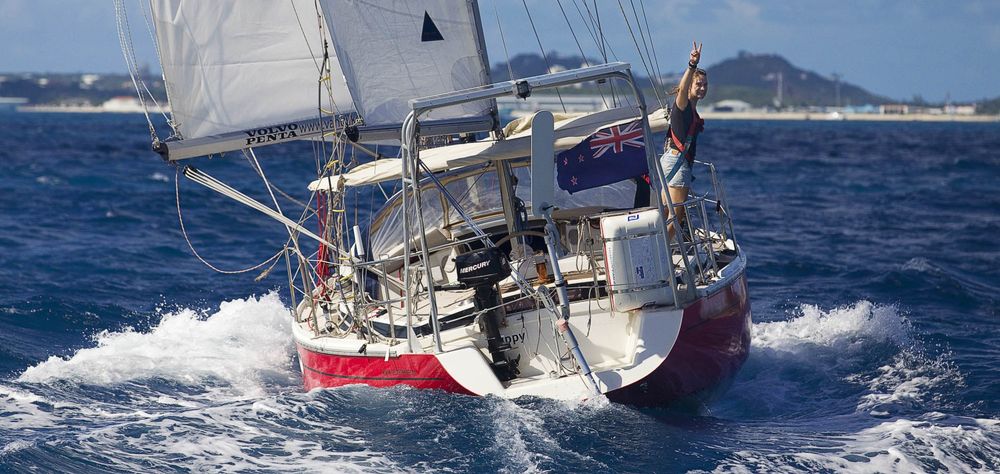
On January 21, 2012, a red-hulled ketch named Guppy sailed into Simpson Bay Marina. On board was Laura Dekker, aged 16 years and 123 days, who had just completed a solo circumnavigation of the globe — 27,000 nautical miles in 518 days. She was the youngest person ever to do it alone.
About 400 people were waiting on the dock and in small boats in the bay. I was watching her arrival from a hill, enjoying the excitement and the sound of the horns of tens of megayachts, moored in Simpson Bay.
She waved, she wept, and she walked across the dock to her family. Sint Maarten had seen the end of one of the more remarkable journeys in sailing history.
The Laura Dekker Story Began Here Too
What most accounts of Laura Dekker's circumnavigation don't emphasize is that her connection to Sint Maarten predates the finish line by years. In late 2009, when Dutch authorities were moving to block her sailing plans and place her under state supervision, the then-13-year-old withdrew her savings, took a train to Paris, and flew to Sint Maarten — intending to buy a boat and disappear. An international search warrant was issued. She was found on the island, returned to the Netherlands, and subjected to a year of court battles and psychological evaluations before the Dutch authorities finally relented.
She chose Sint Maarten as her escape. And when she finished sailing around the world, she chose it as her finish line.
The Court Battle
The Dutch government's intervention in Dekker's plans was, by her own account, one of the more formative experiences of her life — and not in a good way. Three judges with no sailing knowledge were deciding whether a girl who had been sailing since age six, who had made her first long solo passage at ten, and who had already crossed the North Sea alone, was capable of crossing an ocean.
"It seemed really unfair that three judges, who had no idea about boats or sailing, needed to decide whether I was capable of doing such a thing or not," she said later.
The courts eventually ruled in her favor. She departed Gibraltar on August 21, 2010, and did not return to Europe. She sailed west.
The Voyage
Guppy was a 12.4-meter two-masted Jeanneau Gin Fizz ketch that Dekker had refurbished with her father. She sailed port to port rather than non-stop — taking time to anchor, sleep, repair, surf, scuba dive, and teach herself the flute. She crossed the Atlantic, transited the Panama Canal, island-hopped across the Pacific through the Galápagos, French Polynesia, Fiji, and Vanuatu, reached Darwin in Australia, and then set out on what she later described as the journey's most demanding leg: 5,500 nautical miles across the Indian Ocean to Port Elizabeth, South Africa, in 47 days.
By the time she rounded the Cape of Good Hope, she felt she had already achieved everything she set out to do. "Arriving in Sint Maarten felt like just another stop," she said afterward. The record, the crowd, the cameras — those were other people's priorities. She had been doing this for the sea.
The final leg from Cape Town to Sint Maarten was 5,600 nautical miles, sailed non-stop in 41 days. She arrived at 3 PM local time.
The Record That Wasn't Official
Guinness World Records had decided, before Dekker completed her voyage, that it would no longer certify records for youngest solo sailors — on the basis that doing so encouraged dangerous attempts by minors. The World Sailing Speed Record Council also declined to validate the achievement, saying it only recognizes speed records. Neither body's position changed the fact of what she had done.
She was the youngest person to sail around the world alone. The absence of an official stamp did not alter that.
What Sint Maarten Demonstrated
The Dutch government spent considerable energy and legal resource trying to prevent a determined young sailor from sailing. Sint Maarten, when she arrived uninvited at 13 with a plan to disappear into the Caribbean, did not arrest her. The island simply was what it is — a place where people generally have the freedom to make their own choices without the state intervening to protect them from themselves.
It is not a coincidence that she came here. And it is not a coincidence that she finished here.
She went on to found the Laura Dekker World Sailing Foundation, which takes young people to sea on educational voyages. She settled in New Zealand, the country of her birth. Guppy is still sailing.